


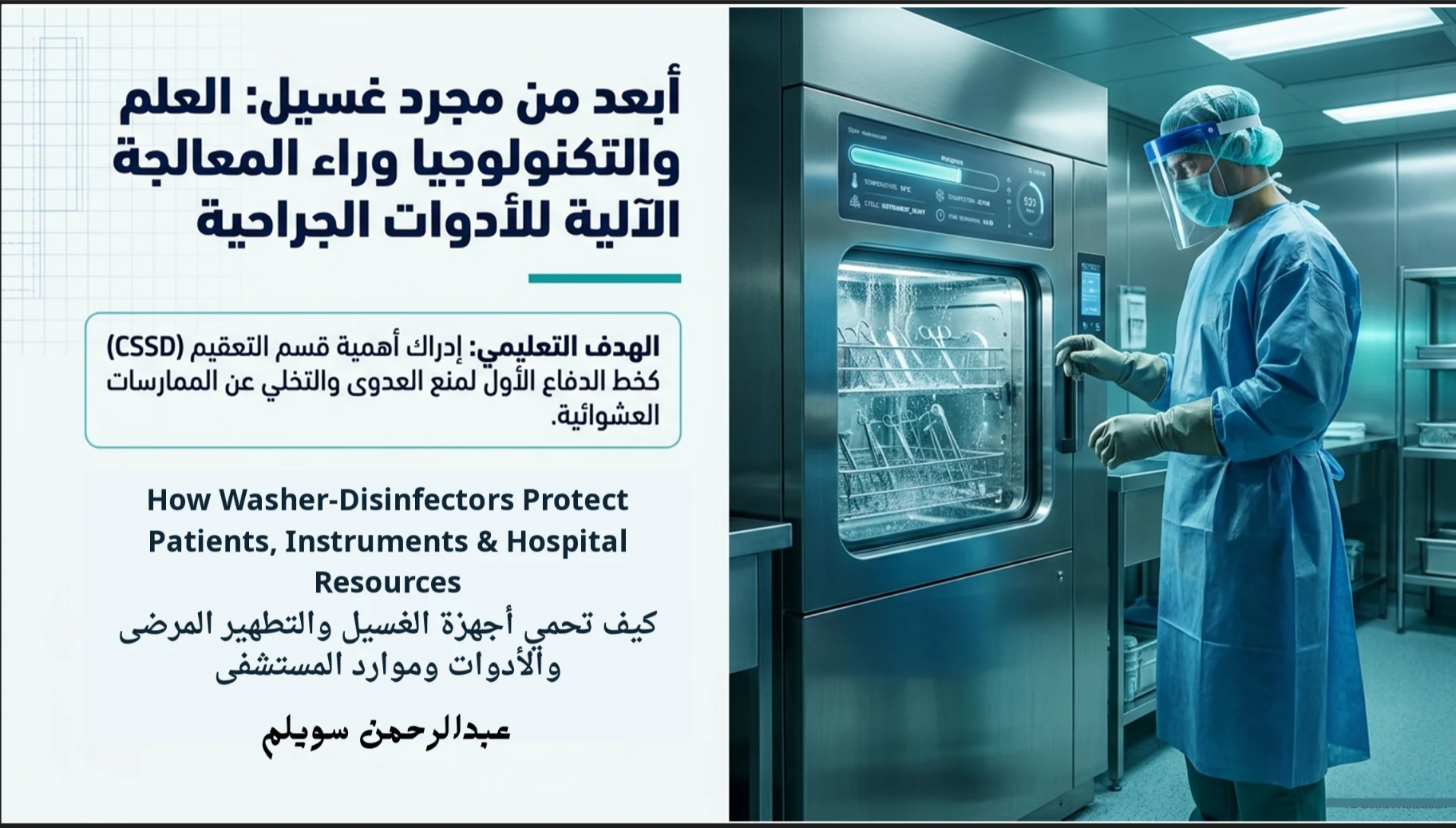
How Washer-Disinfectors Protect Patients, Instruments & Hospital Resources
Washer-disinfectors play an essential role in the reprocessing of surgical instruments within Central Sterile Services Departments (CSSD). Their importance extends beyond simply cleaning instruments, as they support infection prevention practices, help protect patients and healthcare workers, and contribute to preserving valuable instruments and hospital resources.
Successful instrument reprocessing depends on maintaining a well-organized workflow within the CSSD, beginning in the contaminated or soiled area where used instruments are received, moving through the clean area for preparation and packaging, and finally reaching the sterile area where processed instruments are stored. Proper separation between these areas helps minimize the transfer of contamination and reduces the risk of recontaminating processed instruments.
Washer-disinfectors provide a controlled and repeatable automated cycle consisting of several sequential stages, including pre-washing, cleaning, neutralization, thermal disinfection, and drying. Controlling these stages helps provide a more standardized and organized approach to instrument reprocessing compared with relying solely on manual cleaning practices.
The effectiveness of washer-disinfectors also depends on several internal components and systems, including spray arms, water circulation pumps, air extraction systems, and filtered hot-air drying systems. Together, these components help ensure that water reaches the different surfaces of the instruments and that the cleaning and drying cycle is completed appropriately.
However, effective cleaning does not depend on the machine alone. Correct loading and arrangement of instruments are essential to the success of the cycle. Overloading or improper positioning can prevent water from reaching all instrument surfaces. Hollow instruments also require appropriate connections to allow their internal surfaces to be properly cleaned. Therefore, correct loading procedures and verification of cleaning performance are important elements of the reprocessing process.
Automated reprocessing can also provide operational and economic benefits for healthcare facilities by improving resource utilization, reducing reliance on manual processing, helping preserve instruments and extend their service life, and reducing some of the occupational risks associated with direct handling of contaminated instruments.
Ultimately, the proper use of washer-disinfectors as part of an integrated CSSD system demonstrates the important role of technology in improving surgical instrument reprocessing practices. Accurate and standardized automated processing not only helps protect valuable instruments but also supports patient safety, healthcare worker protection, and the efficient use of hospital resources.
Prepared by: Abdelrahman Sweilem